

Everything I Know About Matcha (For Beginners)
If you like matcha or not, read this!

Matcha can feel intimidating at first. The tools, the grades, the bitterness horror stories. But once you understand the basics, it becomes one of the simplest (and most grounding) rituals you can add to your day.
This is everything I wish someone explained to me when I first started + sharing my favorite tools/ powders that I use daily: SHOP HERE
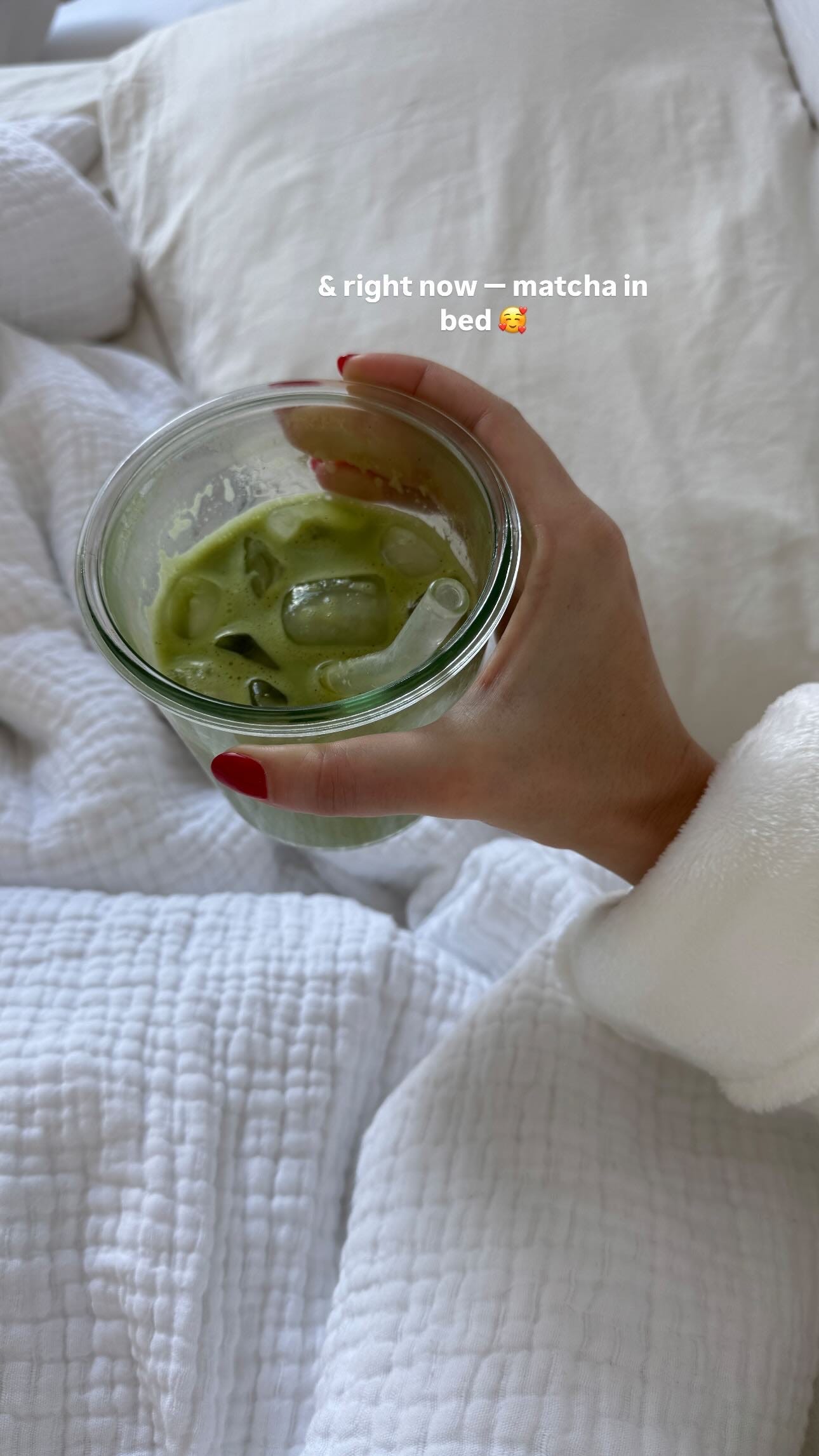
This is me right now while posting this :))
What Matcha Actually Is
Matcha is powdered green tea made from shade-grown tea leaves that are stone-ground into a fine powder. Unlike regular green tea, you’re consuming the entire leaf, not just steeping it and tossing it out.
That’s why matcha:
Has a richer flavor
Feels more energizing
Delivers more antioxidants
It’s also why quality matters more than with regular tea!!
Matcha vs Coffee (The Energy Difference)
This is where most people get curious.
Matcha contains caffeine, but it also contains L-theanine, an amino acid that:
Slows the release of caffeine
Reduces jitters
Helps with focus and calm energy
So instead of a spike-and-crash (hello coffee), matcha feels:
Smoother
More sustained
Less anxious
Matcha Grades (This Is Important)
Not all matcha is created equal, and this is where beginners usually go wrong.
Ceremonial Grade
Bright green
Smooth, slightly sweet
Made to drink straight with water or milk
What you want for daily lattes or rituals
Culinary Grade
Duller green
More bitter
Best for baking or cooking
Not ideal for drinking alone
If your matcha tastes aggressively bitter or murky, it’s usually a grade issue, not a “you don’t like matcha” issue.
What Good Matcha Should Taste Like
Good matcha should taste:
Earthy but fresh
Slightly sweet
Creamy, not sharp
It should not taste:
Burnt
Fishy
Overly grassy
Chalky
Color is a quick test: bright green = good sign. Yellowish or brown = pass.
The Basic Tools (You Don’t Need Everything)
You don’t need a full ceremony setup to start, but a few things help.
Nice to have
Bamboo whisk (chasen) for smooth foam
Small bowl or wide mug
Fine sieve (prevents clumps)
Can substitute
Milk frother instead of a whisk
Any heatproof mug instead of a bowl
Matcha is ritual-adjacent, not ritual-required.
How I Make Matcha at Home
My go-to, no-drama version:
1–2 teaspoons matcha into a bowl or mug
Add a small splash of hot (not boiling) water until you have a paste
Whisk or froth until smooth and keep adding more water until it’s the consistency you like
Add warm milk or almond milk (I prefer almond with my matcha)
Sweeten lightly if needed (honey or maple)
FYI- Water that’s too hot will make matcha bitter!!!
EVERYTHING I USE/LIKE — SHOP HERE


